Project Background
Bringing sponsors into scholastic esports without breaking the experience
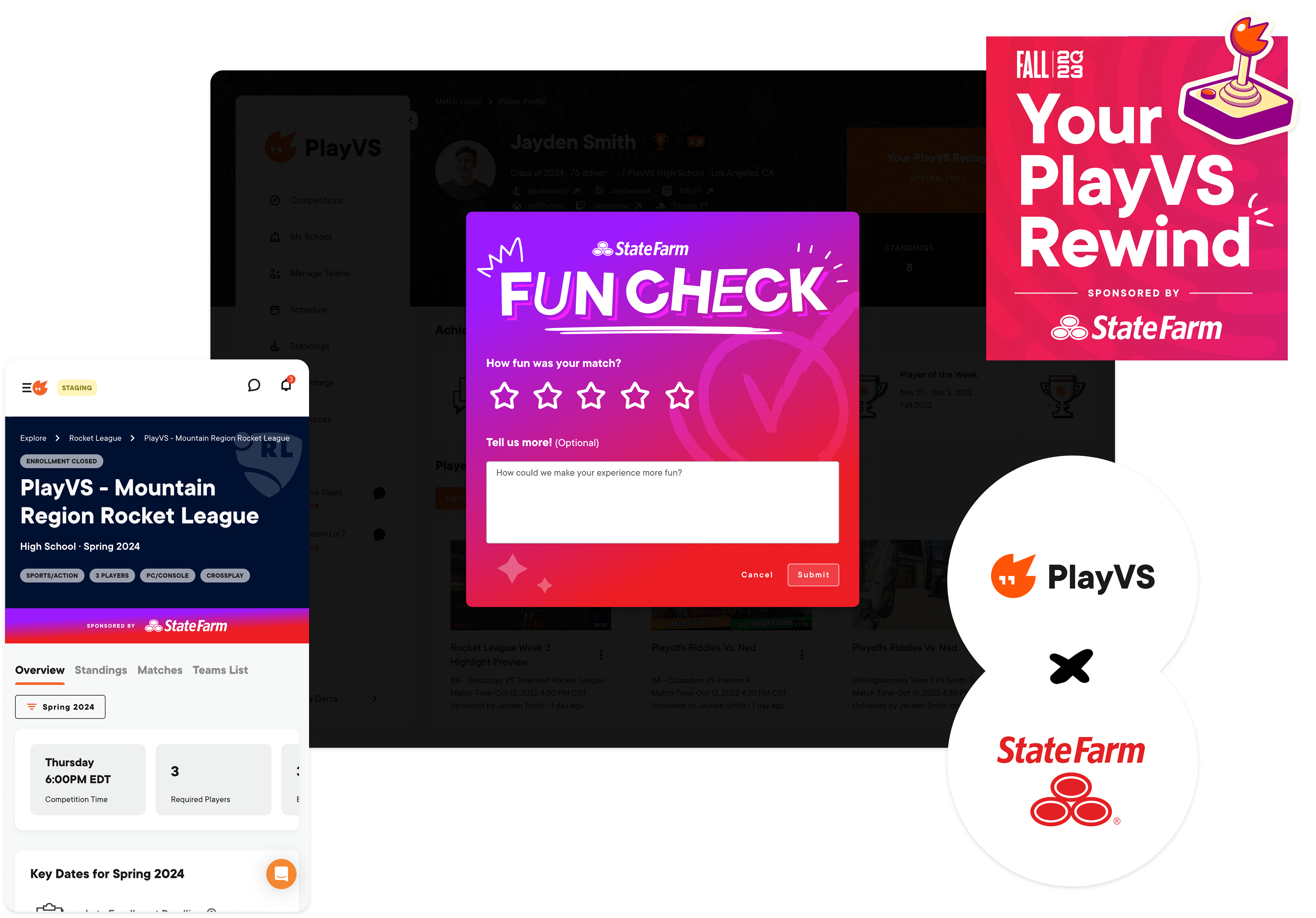
PlayVS runs scholastic esports leagues for high school and middle school students. As the platform scaled, sponsorships became an important revenue stream: brands wanted visibility, schools wanted free programs, and our business needed sustainable growth.
The challenge: how do we let partners show up inside the product without turning a coaching tool into an ad surface, or distracting players from competition?
MY ROLES AND DESIGN PRINCIPLES
Built sponsorship as a scalable product system
• Owned sponsorship UX across desktop and mobile web
• Designed with clear principles, PlayVS first, fixed placements, value over noise, built to scale
• Standardized key touchpoints in navigation, leagues and match experiences
• Made sponsorship configurable in Checkpoint so new partners can launch without redesigning each time
• Designed with clear principles, PlayVS first, fixed placements, value over noise, built to scale
• Standardized key touchpoints in navigation, leagues and match experiences
• Made sponsorship configurable in Checkpoint so new partners can launch without redesigning each time
CONCEPT EXPLORATION
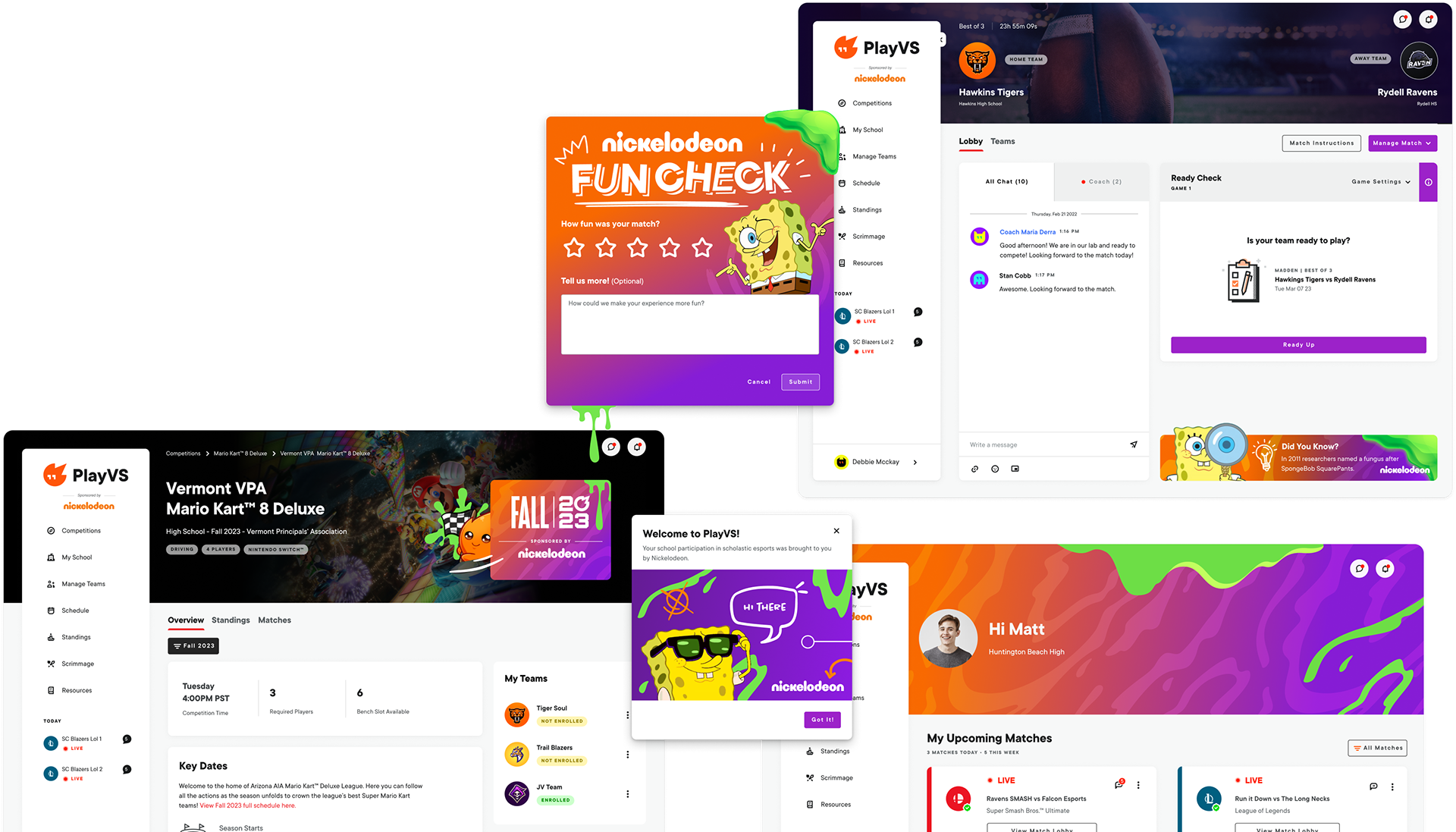
Mapping sponsorship touchpoints across PlayVS
At the concept phase, we explored where sponsorship could live without taking over the product, from navigation lockups, to league heroes and season cards, to lightweight moments like welcome modals and match day banners. The goal was to map all possible surfaces first, then pick a small set that felt additive to the competitive experience.
BRAND THEMING
Mini styleguides layered on top of our design system
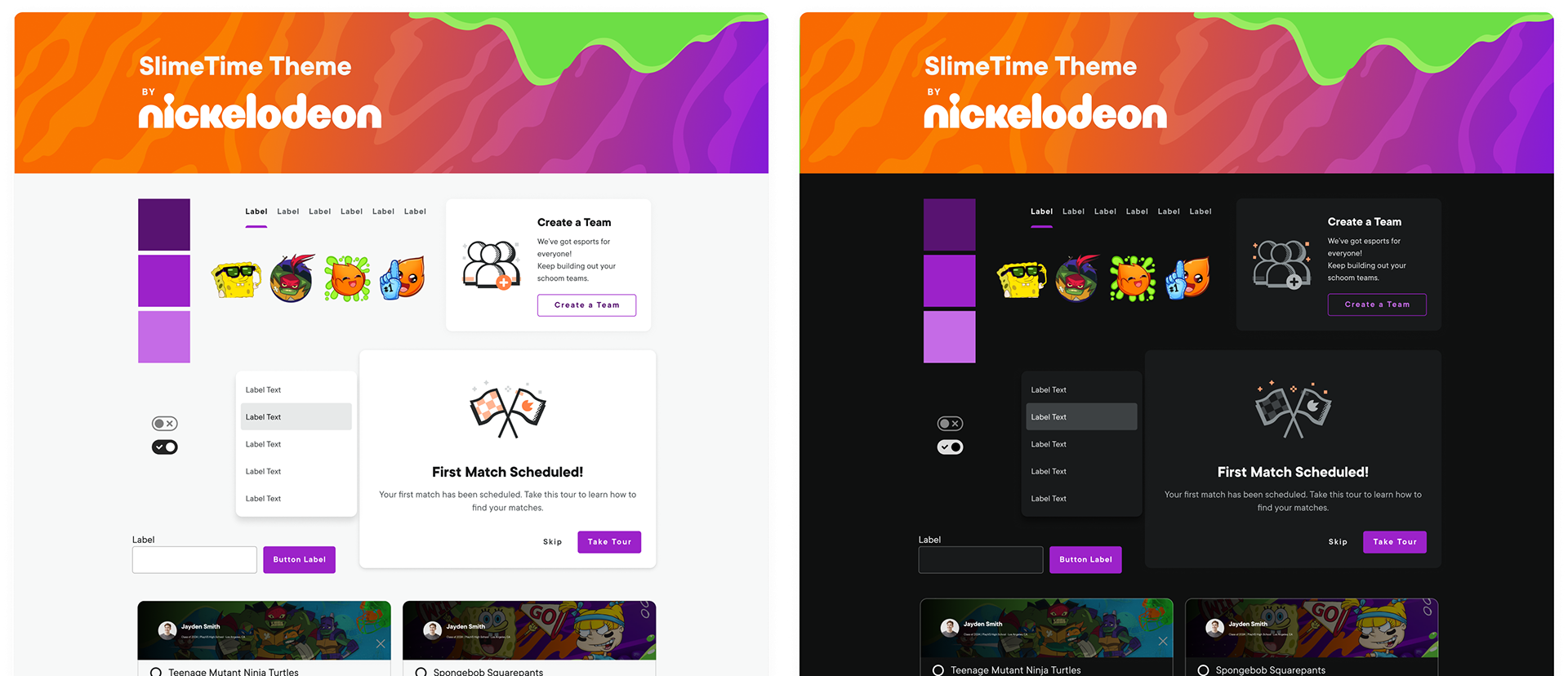
For each partner, we created a lightweight styleguide that plugs into existing tokens and components.
For example, for Nickelodeon, that meant using their purple and playful shapes in hero moments while keeping core PlayVS UI structure and accessibility rules unchanged. This allowed partner personality to show up without breaking consistency across the rest of the product.
NFL INTEGRATION
Turning our largest partnership into a scalable system
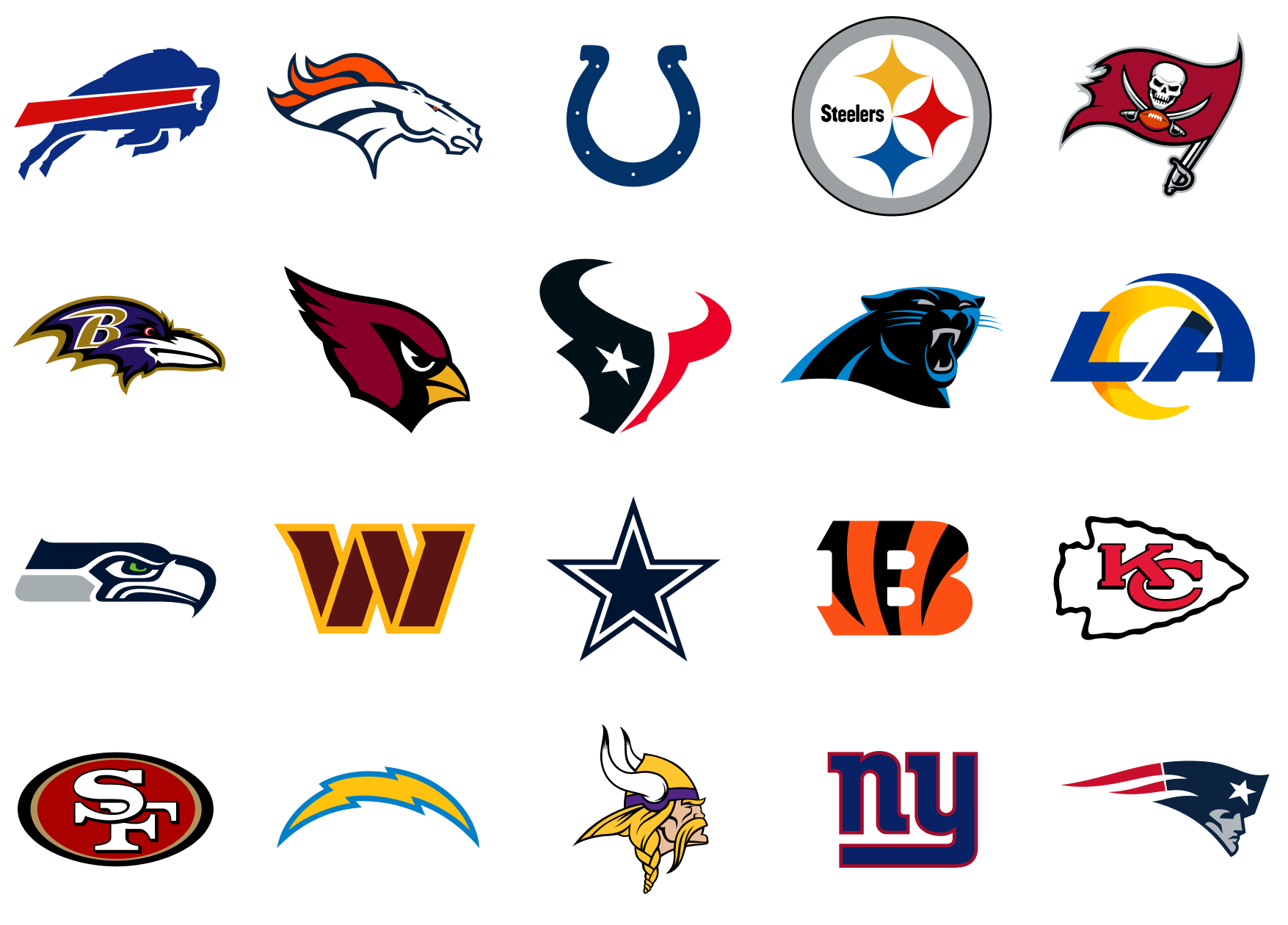
NFL was our largest seven figure sponsorship partner, and it became the proof point for building a repeatable pattern instead of a one off integration.
• Built an asset and metadata library per club, logos colors naming and required legal lines
• Standardized placement rules across nav league surfaces and match experiences so it feels clearly NFL powered while still reading PlayVS first
• Designed an internal admin view so ops can attach the right club to the right league and update branding safely without new design cycles
NFL CLUB EXAMPLE
LA Rams, scaling one club setup across many
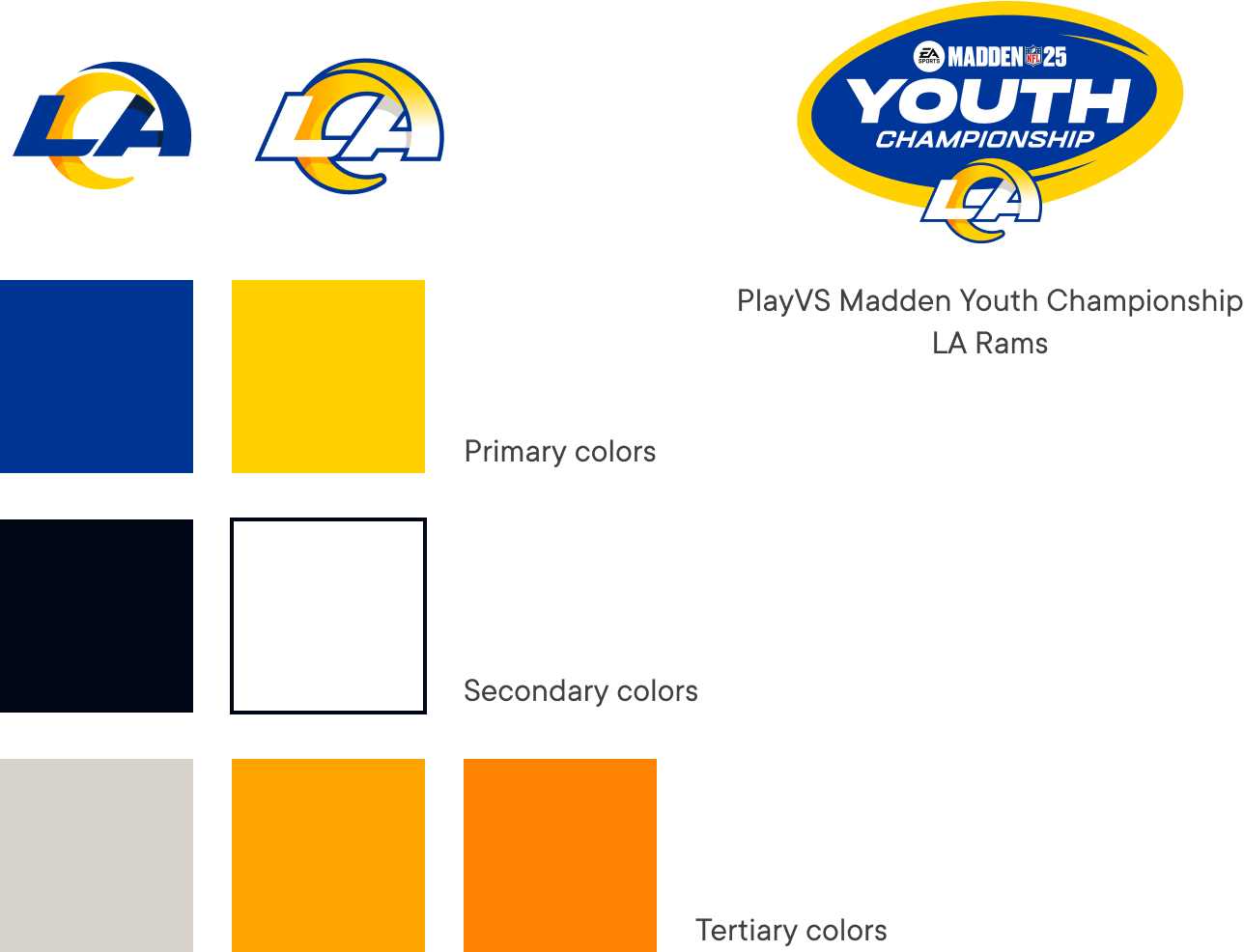
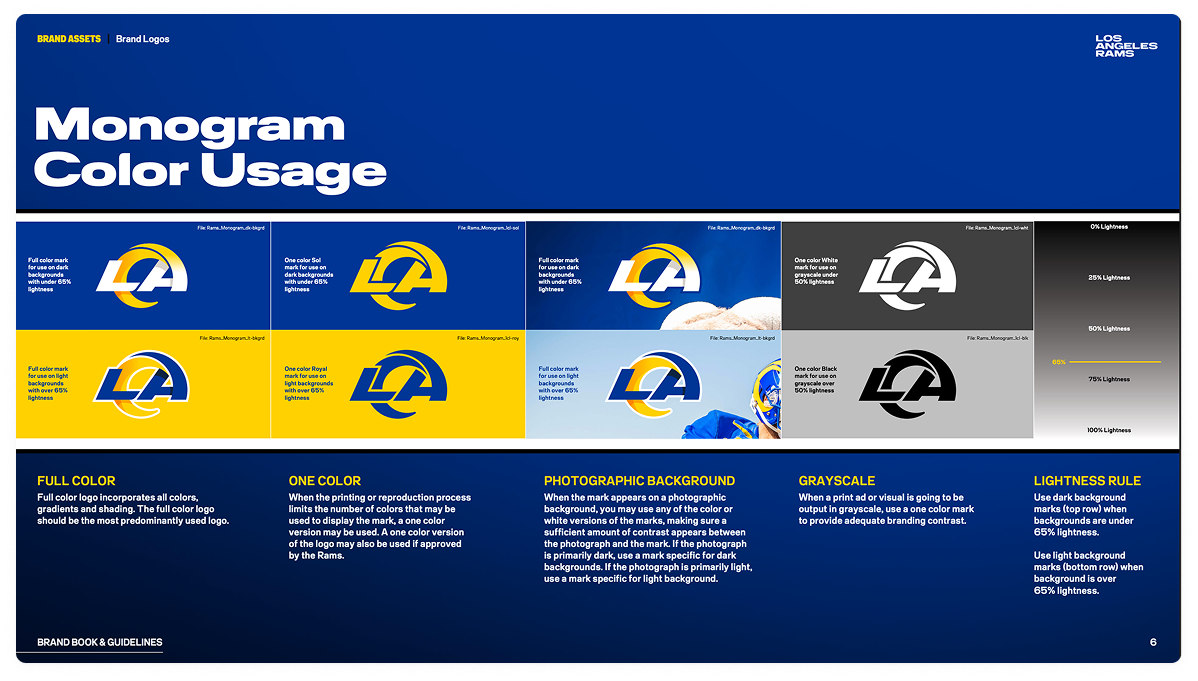
Using the LA Rams as an example, we interpreted their brand guidelines and translated them into a PlayVS ready identity for a Madden Youth Championship. Once the pattern was defined, we could scale the same approach to other clubs, keeping each club recognizable while maintaining consistent PlayVS structure and accessibility.
sponsorship touchpoint 1
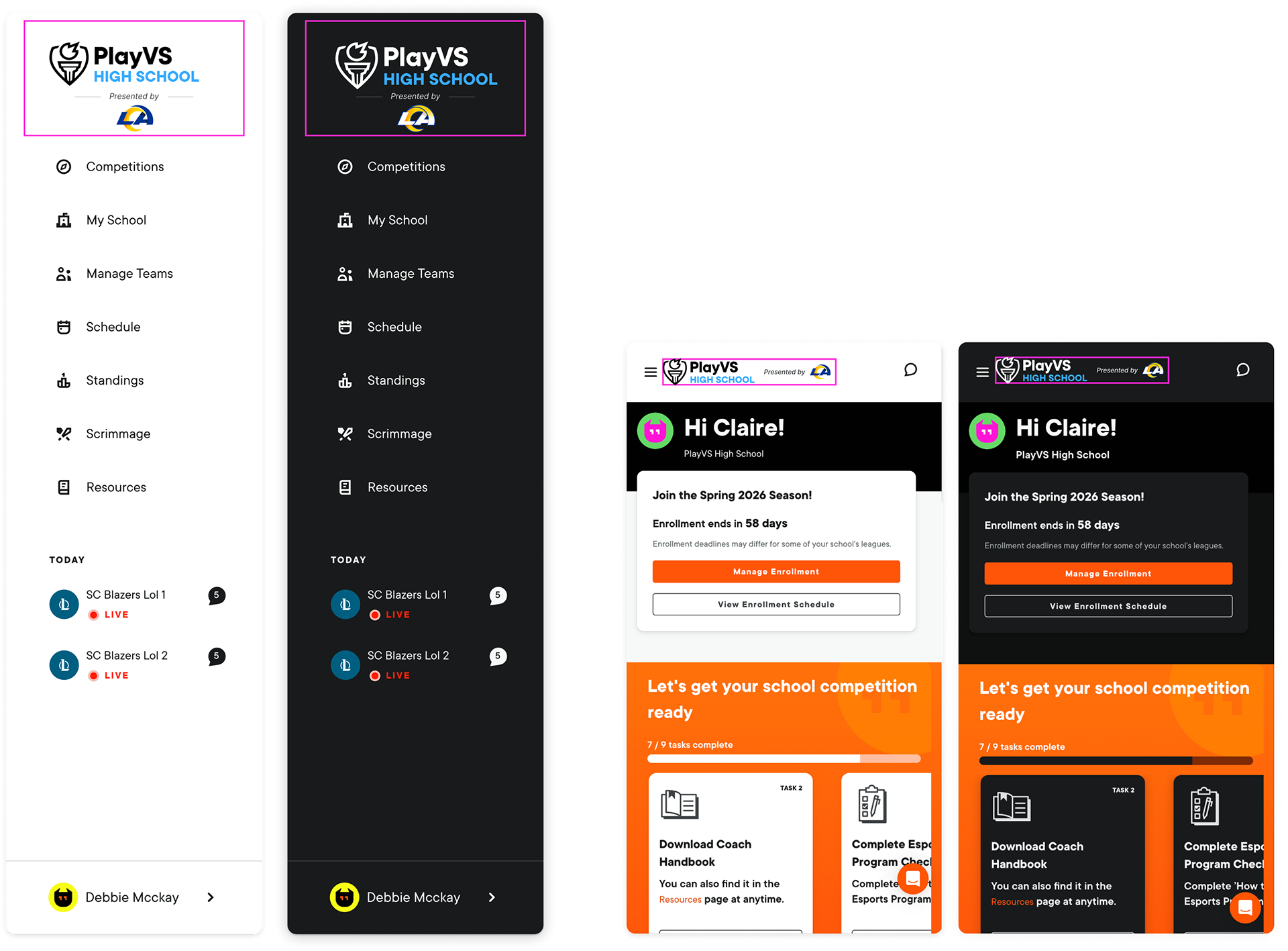
A standardized sponsor slot in global navigation
• Defined a fixed frame for the presented by lockup so any partner can drop in without custom layout work
• Set consistent scaling padding and truncation rules aligned to our tokens, making implementation and QA simpler
• Kept sponsor visibility high but contained, without competing with core navigation
• Set consistent scaling padding and truncation rules aligned to our tokens, making implementation and QA simpler
• Kept sponsor visibility high but contained, without competing with core navigation
sponsorship touchpoint 2
Sponsor presence that stays secondary to the league
• On desktop, sponsor lockup sits in a fixed slot within the league banner so the league and game stay primary
• On mobile, the lockup moves below the banner to protect readability and avoid crowding the hero
• Consistent placement across breakpoints made sponsor experiences predictable and easier to maintain
• On mobile, the lockup moves below the banner to protect readability and avoid crowding the hero
• Consistent placement across breakpoints made sponsor experiences predictable and easier to maintain


sponsorship touchpoint 3
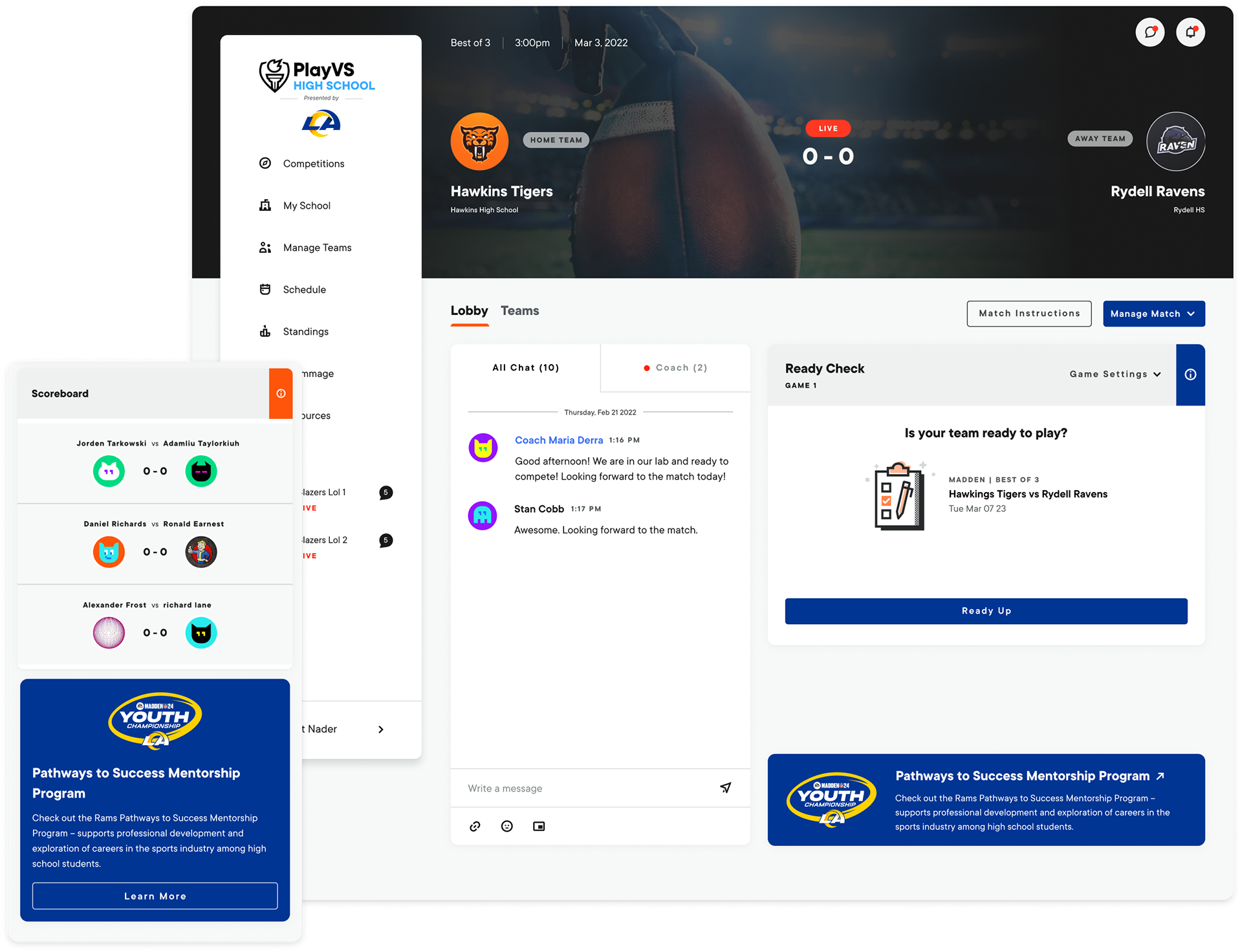
Match lobby moments that bring real value
• Replaced generic banners with club specific cards tied to the league context, such as mentorship or pathways programs
• Partner authored content was adapted to PlayVS tone so it stays school safe and student focused
• Kept messages targeted to the right leagues so it feels relevant, not like a random promo
• Partner authored content was adapted to PlayVS tone so it stays school safe and student focused
• Kept messages targeted to the right leagues so it feels relevant, not like a random promo
internal management tool
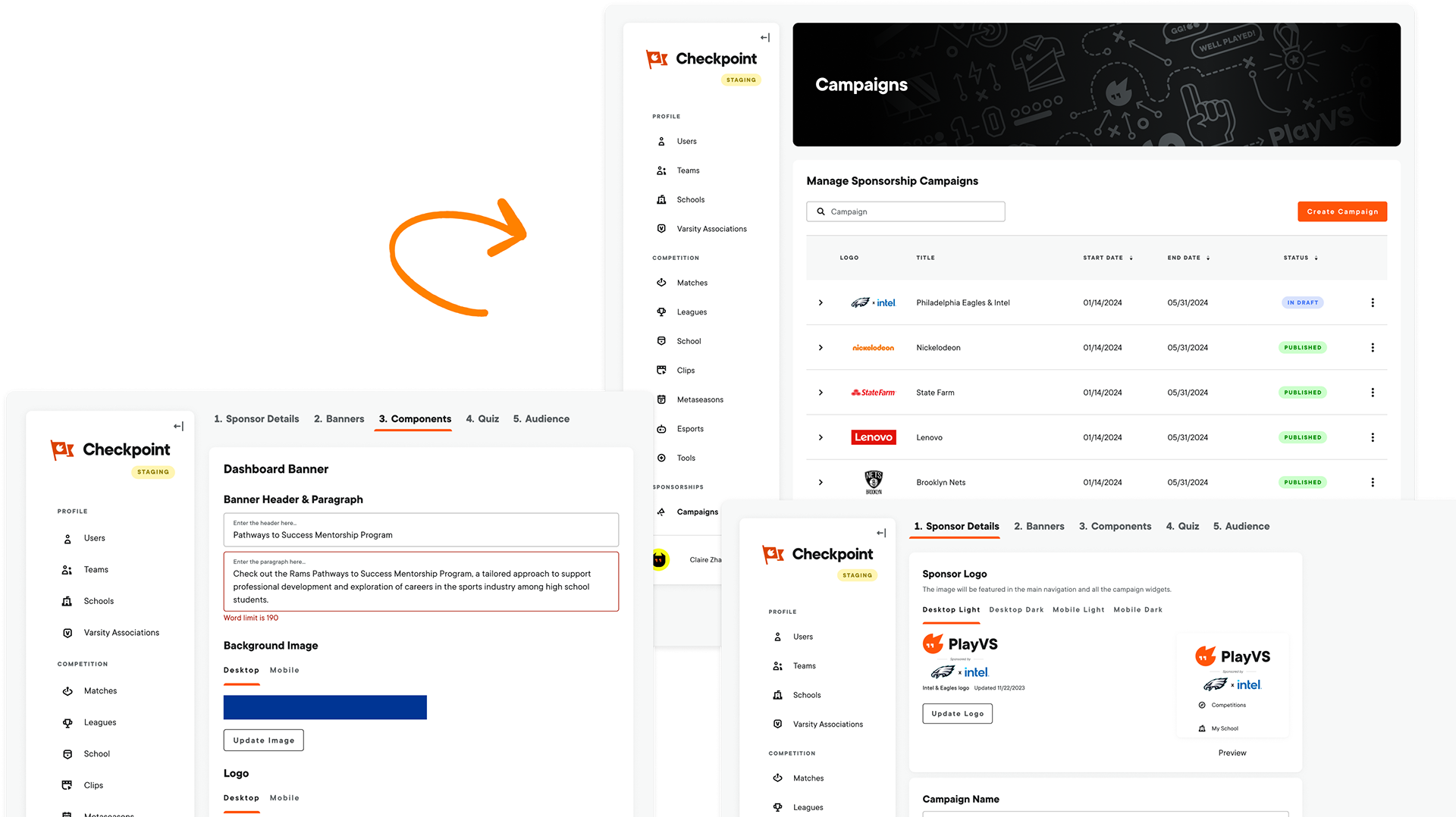
Managing sponsor campaigns in one place
To keep sponsorship scalable, we treated each partner as a campaign in Checkpoint with defined branding placements and dates.
I defined the visual rules and specs in Figma, while ops could upload assets, attach campaigns to leagues, and toggle them on or off. This reduced repeated engineering work and made it easy to update or retire campaigns without redesigning surfaces.

